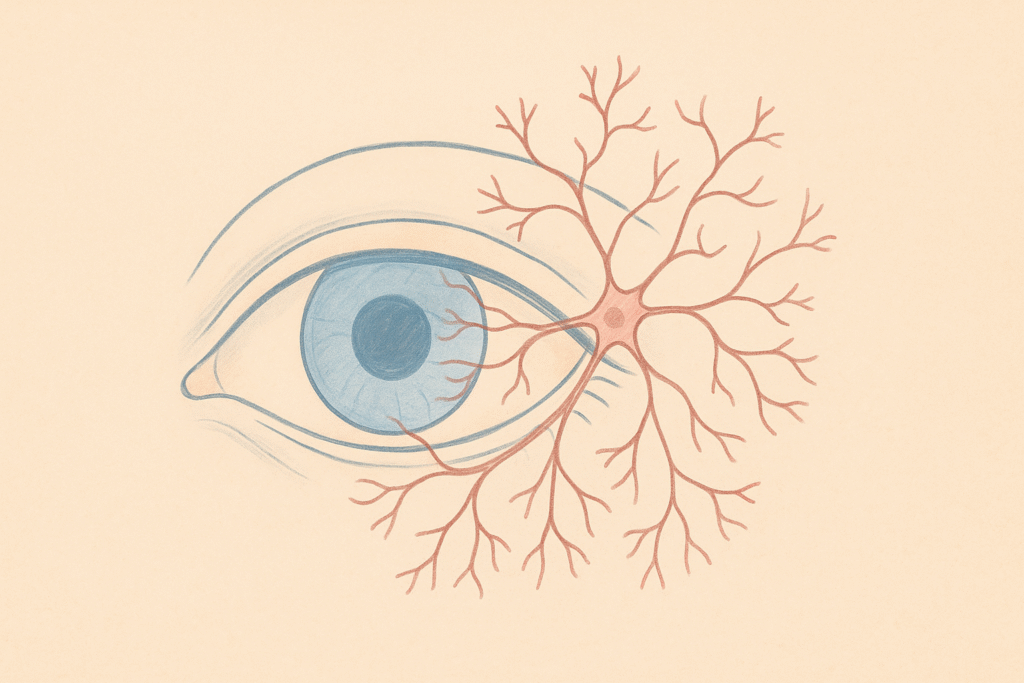
We’ve all used AI to draft emails, summarize articles, or find recipes. But what if I told you the real superpower isn’t what AI can do for you, but what it can reveal about you?
Most of us are sitting on a goldmine of self-awareness and completely missing it.
The Mirror You’ve Been Avoiding
There’s something strange happening. Millions of people are having deeply personal conversations with AI, asking questions they wouldn’t dare ask their friends. Questions about their flaws, their relationships, their secret fears.
And the AI answers. Without judgment. Without agenda. Just patterns and logic.
Try this tonight: Open your most-used AI and ask it what patterns it sees in your behavior. Ask where you’re holding yourself back. The response might make you squirm a little. That’s usually a good sign.
When you’ve been using an AI regularly, telling it about your work stress, relationship issues, and daily frustrations, it starts connecting dots you can’t see. It notices when you blame external circumstances every time something fails. It spots when your “high standards” are actually just fear of being judged.
The difference between AI and your actual friends? Your friends care about your feelings. AI cares about accuracy.
You’re Probably Doing This Wrong
Most people use AI like a fancy Google. They throw in a question, grab the first answer, and bounce.
That’s like buying a telescope and using it as a paperweight.
The breakthrough comes when you learn to structure your requests. Not in some technical “prompt engineering” way, but like you’re briefing someone who actually wants to help you.
Tell it who to be. Want business advice? Ask it to respond as a seasoned entrepreneur. Need emotional clarity? Request a thoughtful therapist’s perspective. The AI literally performs better when you assign it a role.
Explain what you’re optimizing for. Don’t just ask for advice, explain what matters most. Are you trying to save time? Build better relationships? Make more money? The same question gets wildly different answers depending on your priorities.
Define how to think about your problem. Tell it to reason from first principles. Ask it to challenge your assumptions. Request brutal honesty instead of encouragement. You control the lens through which it analyzes your situation.
Specify your desired format. Want a summary? A list of options? A step-by-step plan? Tell it exactly what format would actually be useful to you.
This isn’t complicated. It’s just intentional.
The Power of Getting Interviewed
Forget asking questions. Let the AI ask you questions.
This shift changes everything. Instead of seeking answers, you’re exploring what you actually think and feel through guided inquiry.
Tell the AI: “Interview me about why I keep procrastinating on this project.” Then answer honestly as it digs deeper. You’ll watch it connect things you never connected yourself.
I’ve used this approach for setting goals, and it exposed contradictions I’d been living with for years. The AI asked why I wasn’t delegating more. I said I didn’t have time. It asked why I hadn’t hired help. I said I didn’t have time for that either.
Suddenly, I’m staring at my own circular logic. No lecture, no judgment. Just a mirror held up to my thinking.
The same technique works brilliantly for understanding failures. Walk the AI through what happened, let it probe your decision-making, and it’ll identify exactly where your blind spots kicked in.
Different Tools, Different Strengths
Not every AI is built the same, and matching the tool to your need matters more than you’d think.
Some excel at logical structure but miss emotional nuance. Others understand feelings deeply but overcomplicate simple problems. Some will tell you hard truths, others default to encouragement.
For psychological questions and emotional complexity, I gravitate toward models known for nuance. For strategic thinking and motivation, I prefer those that push harder. For technical problems, I use the ones that process information best.
The real trick? Cross-reference. Ask three different AIs the same question. Where they agree, you’ve probably found truth. Where they diverge, you’ve found complexity worth exploring.
Know the Limitations
AI crushes ambiguous, messy, human problems. Relationship dynamics, career decisions, emotional patterns… it processes this stuff brilliantly because there’s no single “right” answer.
But pure mathematics? Financial calculations? Specific data analysis? It stumbles. Hard.
These systems think in language, not numbers. They’ll confidently give you wrong statistics, hallucinate facts, and mess up calculations while sounding completely certain.
Use AI for insight, pattern recognition, and strategic thinking. Don’t use it as your accountant.
What Nobody Admits Out Loud
Everyone’s doing this. Everyone’s asking AI for life advice, working through personal problems, seeking emotional clarity. We just pretend we’re not.
There’s this weird shame around it, like admitting you talk to AI about your problems makes you somehow less capable. But that’s backwards.
The smartest people I know use every tool available. And right now, AI is the most accessible thinking partner most of us will ever have.
Just be intelligent about it. Don’t dump vague feelings and expect miracles. Provide context. Explain your history with similar issues. Describe your constraints and what you’ve already tried.
Quality input creates quality output. Always.
Learn from the tool itself. Got a disappointing response? Ask the AI how you could have phrased your question better. It’ll actually teach you how to use it more effectively.
Remember it’s one voice among many. Use AI as a thinking aid, not the final authority. Compare perspectives across different models. Talk to real humans who know you. Integrate everything.
Start Tonight
You don’t need a course, a strategy, or special access. You just need to stop using AI like a search bar and start using it like a thinking partner.
Pick something you’re struggling with. Give the AI real context. Ask it to challenge your thinking. Give it permission to be uncomfortably honest.
Then sit with whatever comes back.
The answers that make you defensive are usually pointing at something real. The insights that feel obvious in hindsight are often the blindspots you needed revealed.
We’ve got these powerful tools in our pockets, and most of us are using them to generate grocery lists. That’s fine. But you’re capable of so much more.
FAQs
Is my personal information safe when sharing with AI? Most platforms store and analyze your conversations. Share accordingly and check each platform’s privacy policy before diving deep.
How do I know which AI to trust for different questions? Experiment with multiple platforms for the same question. You’ll quickly learn which ones resonate with your thinking style.
Should I stop seeing my therapist and just use AI? Absolutely not. AI is a reflection tool, not a replacement for professional mental health care when you genuinely need support.
What if the AI gives me advice that feels wrong? Trust your gut. AI offers perspectives, not commands. If something feels off, it probably is for your specific situation.
If this post opened your mind, sparked a shift, or gave you something real to carry forward — don’t let the inspiration stop here. Fuel the journey.
Your “Buy me a coffee” contribution helps me stay independent, create deeper work, and keep showing up with value that moves you.
Ready to go beyond the surface?
Upgrade your subscription and unlock the kind of exclusive insights I reserve only for my most committed readers – content designed to help you grow faster, think clearer, and elevate your life with intention.